
Art · Fundación César Manrique, Taro de Tahíche (Teguise)
Taro de Tahíche: a home inside the lava
César Manrique’s studio-home, carved into volcanic bubbles, remains the calmest lesson in how to live on Lanzarote.
By Pablo Vidal · 2026-10-02
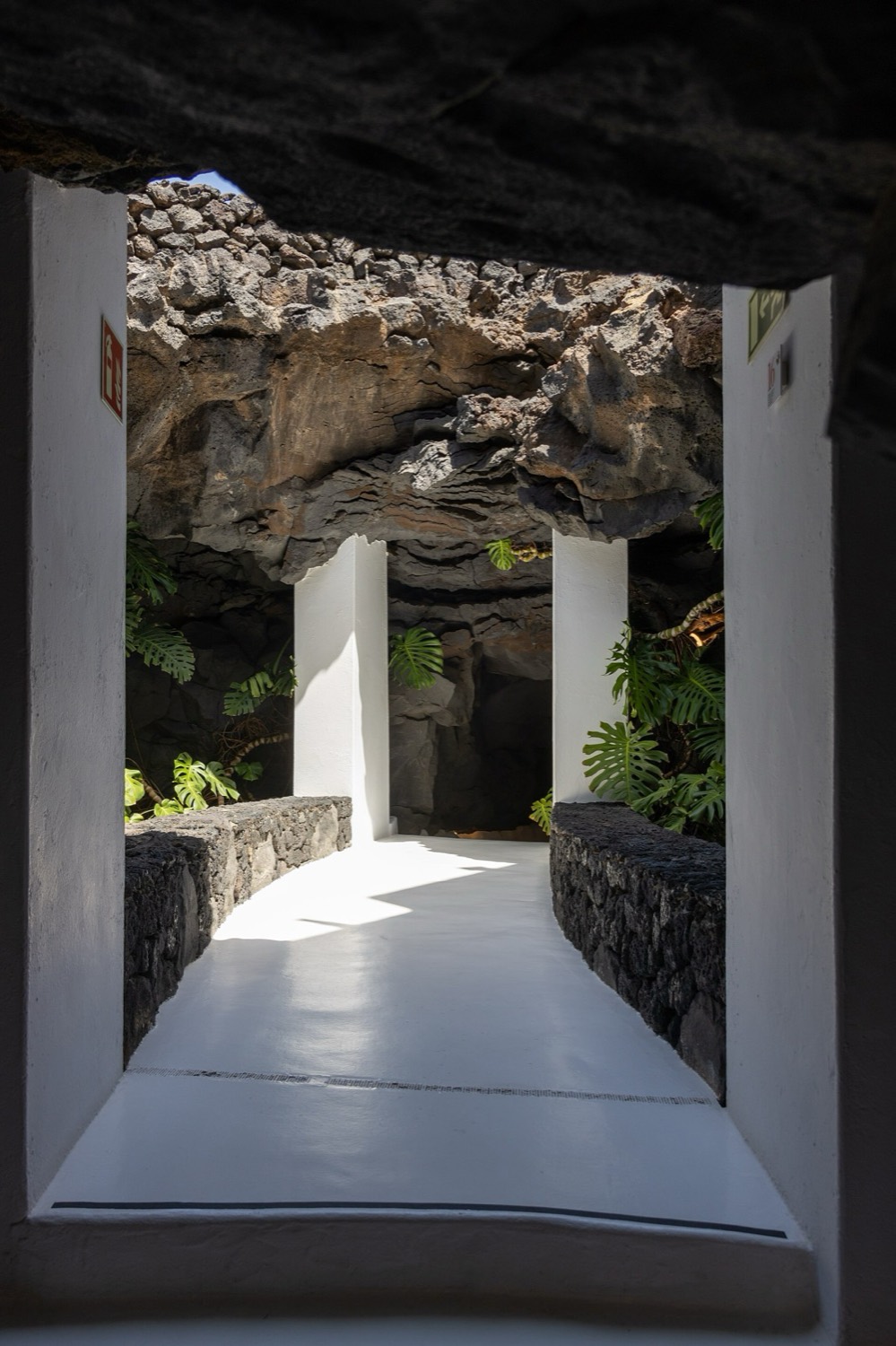
From the road you would hardly guess: a white wall, the black sea of lava left by the eruptions of 1730 to 1736. Yet beneath that surface César Manrique found a home. His studio-house at Taro de Tahíche sits on the old lava field and drops into the earth, where its rooms occupy volcanic bubbles.
Going down the stairs changes both the temperature and the pace. Each bubble is a room with a stone ceiling and light falling from above; whitewashed walls and green plants soften the rock without hiding it. The architecture does not impose — it listens. You hear little more than footsteps and, now and then, the brush of leaves.
Manrique, born in Arrecife in 1919, turned the house into the headquarters of his Foundation, which opened on 27 March 1992. Some six months later, the artist died. The house became his last public gesture: an open door. It still feels that way: generous, unhurried, welcoming.
What waits inside
The rooms hold Manrique’s own work alongside the collection of contemporary art he gathered from artists of his generation. Seeing those canvases a few metres from raw lava feels like a quiet conversation between what the hand makes and what the volcano makes. There are few better ways to understand an artist than to see what he chose to keep around him.
The Foundation is private and self-funded, with two homes: this Casa del Volcán in Tahíche and the Casa del Palmeral in Haría, the artist’s final retreat in the north.
Come back in autumn, when the light is lower and the crowds lighter, and you begin to understand what Manrique argued for so tirelessly: on Lanzarote, beauty is not added — it is discovered. Before leaving, pause upstairs facing the lava field and try to see it the way he did.