
People · Echadero de los Camellos, Parque Nacional de Timanfaya (Yaiza)
Six hundred years of camels on Lanzarote
They came from Africa in the early 1400s and for centuries ploughed, carried and built the island. Today they climb to the volcanoes every morning.
By Livia Risi · 2026-11-14
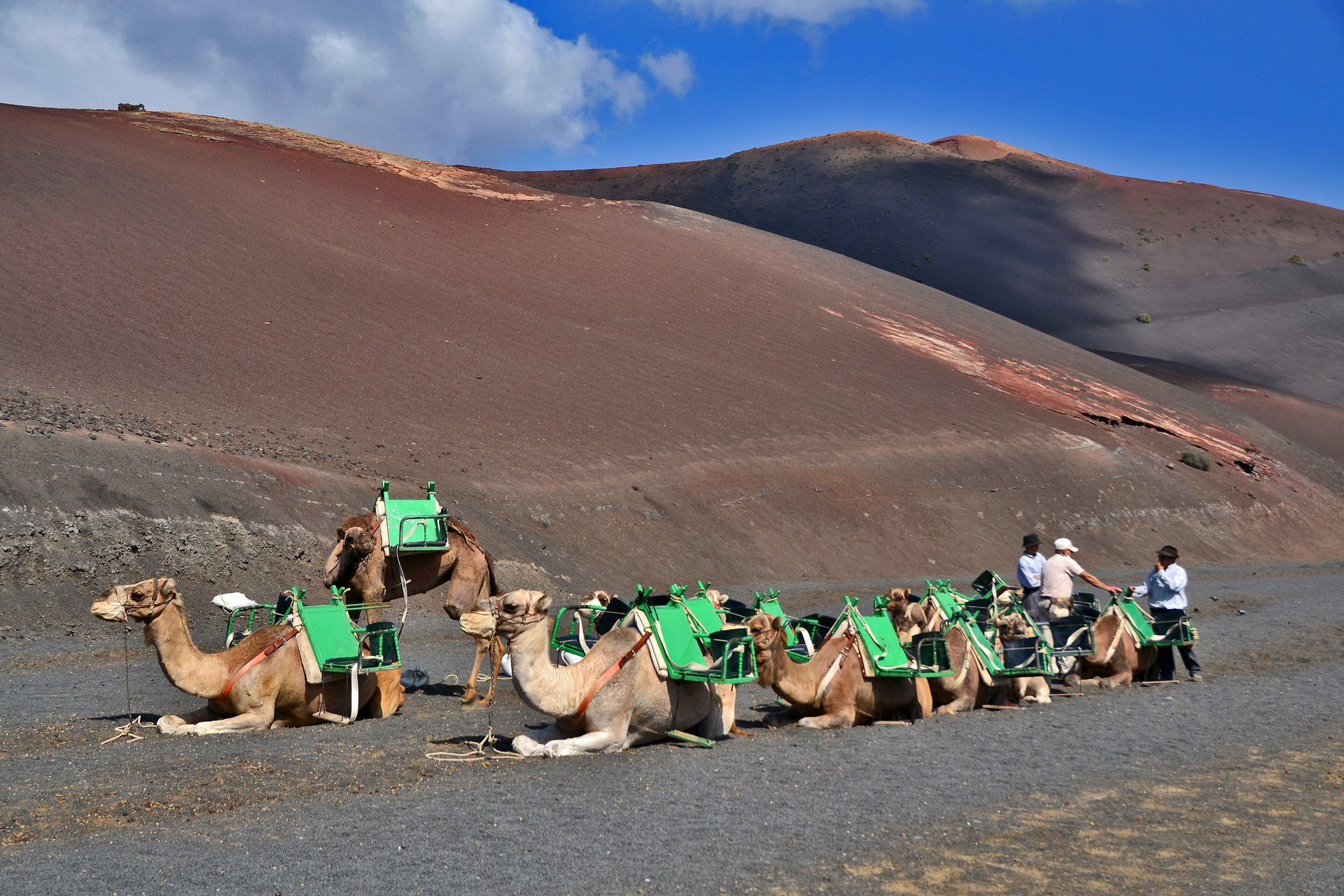
Before the European conquest there were no camels on Lanzarote. The first arrived around 1405 from the nearby African coast, aboard the ships of the island’s first lords. People here have always called them camels, though they are dromedaries, with a single hump.
The island took to them at once. In years of drought they got by on whatever there was, fig branches, prickly-pear pads, dry scrub, and kept on working. By 1776 Lanzarote counted 1,723 of them.
They were the island’s tractor. They ploughed, threshed, turned the water wheels and, when the windmills had no wind, the millstones of the tahonas. Yoked with a donkey, people said, the camel brought the strength and the donkey kept the furrow straight.
They shaped the landscape too, hauling the stones for the walls and the black volcanic gravel that covers the fields of La Geria. In 1906 King Alfonso XIII crossed Lanzarote on camelback. And Australia’s first dromedaries, from 1840 onwards, came from the Canary Islands.
Machines took them off the fields, but not off the island. Today there are about three hundred, nearly all from Uga: every morning they walk up to the Echadero in Timanfaya and carry visitors among the volcanoes, one on each side of the saddle. Since 2012 the Canary camel has been an official breed, the only one of its kind in Europe.