
Nature · La Graciosa e islotes del norte (Archipiélago Chinijo)
The sea the fishermen chose to protect
The marine reserve around La Graciosa and the northern islets was born in 1995 at the request of the fishermen themselves.
By Francesco Esposito · 2026-10-01
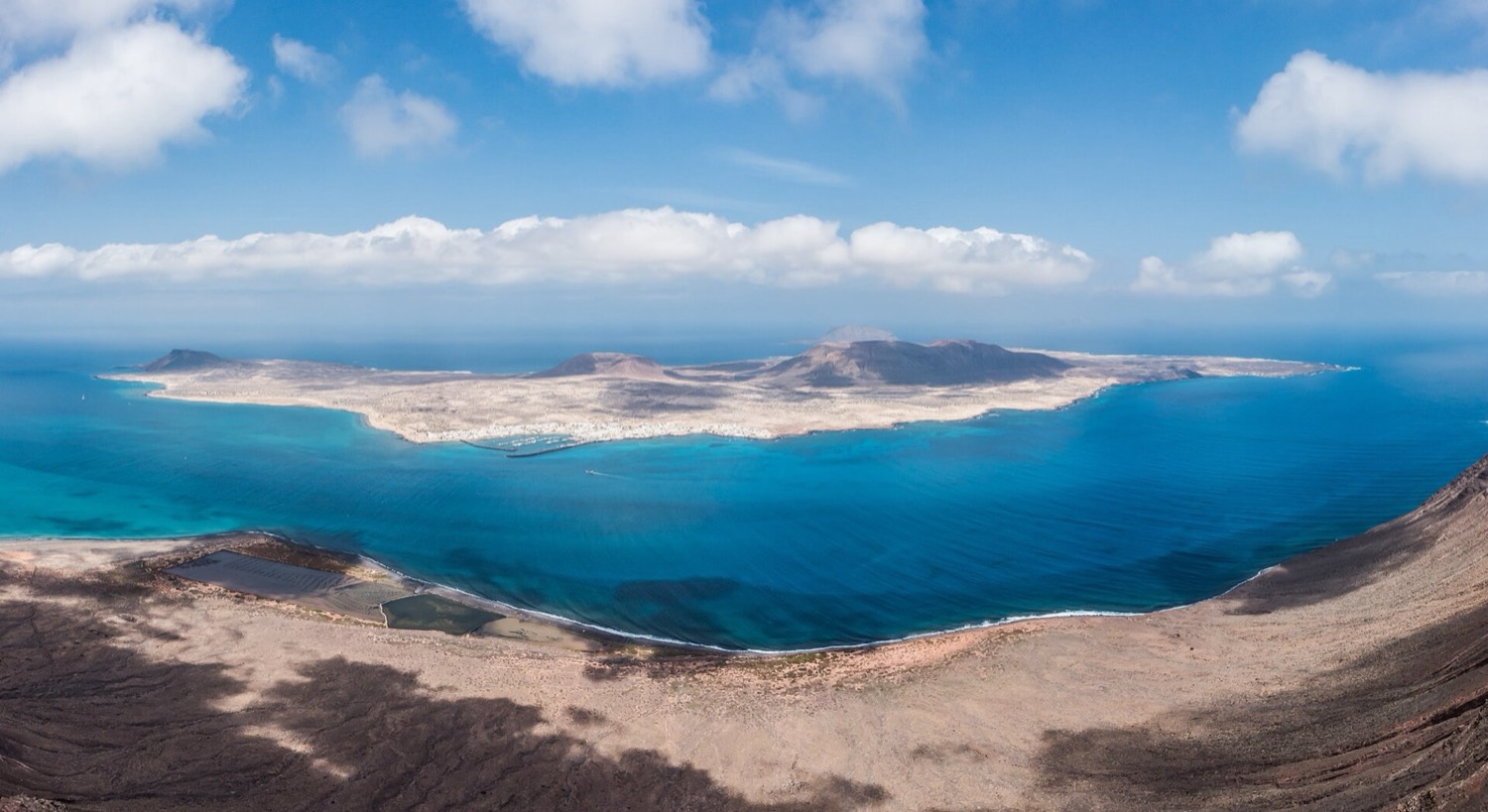
From the top of the Famara cliffs, La Graciosa seems to float on water of improbable colours. What you cannot see from up there is the story of that sea: more than thirty years ago, the people who lived from it chose to protect it. Down there, among islets with resonant names, the Atlantic keeps some of the most vibrant waters in the archipelago.
The marine reserve of La Graciosa and the islets north of Lanzarote was created in 1995, and its origin is what makes it special. The initiative came from the fishing community itself, backed by the Spanish Institute of Oceanography and the University of La Laguna. The fishermen understood before anyone else that looking after the sea meant looking after their own future.
A vast sea, one untouchable circle
The reserve covers 70,700 hectares, reaching across northern Lanzarote, La Graciosa, Montaña Clara, Roque del Oeste, Roque del Este and Alegranza. Roughly 60 per cent is inshore water and 40 per cent offshore, so management is shared between Spain’s central government and the Canary Islands. There, fish can grow larger and breed in peace, and their abundance then spills over into the surrounding waters.
At its heart lies a place where no fishing happens at all: a circle one mile in radius around Roque del Este, set aside as a fully protected zone. It is a sanctuary where marine life can grow undisturbed.
Below the surface stretch the seagrass meadows of Cymodocea nodosa, known locally as sebadales, a nursery for countless species. From the deep, upwellings of cold, nutrient-rich water rise to feed the whole chain.
A fine story to open October with: proof that protection can grow from within, from the people who know the sea best. Looking at it from a viewpoint or from the deck of a boat takes on a different meaning.