Words · Lanzarote
My first trip to Lanzarote
The story sent to us by Emanuela, a reader, after her first trip to the island.
By Emanuela · 2026-11-03
Some journeys begin long before you leave. I kept this one aside for months, the way you keep something precious: with excitement, with joy, and with that thread of fear that always comes with what truly matters to us.
Then the aircraft door opened and a clean, bright air came to meet me. It asked nothing of me. It simply welcomed me. And I, for once, did not defend myself: I let myself be welcomed.
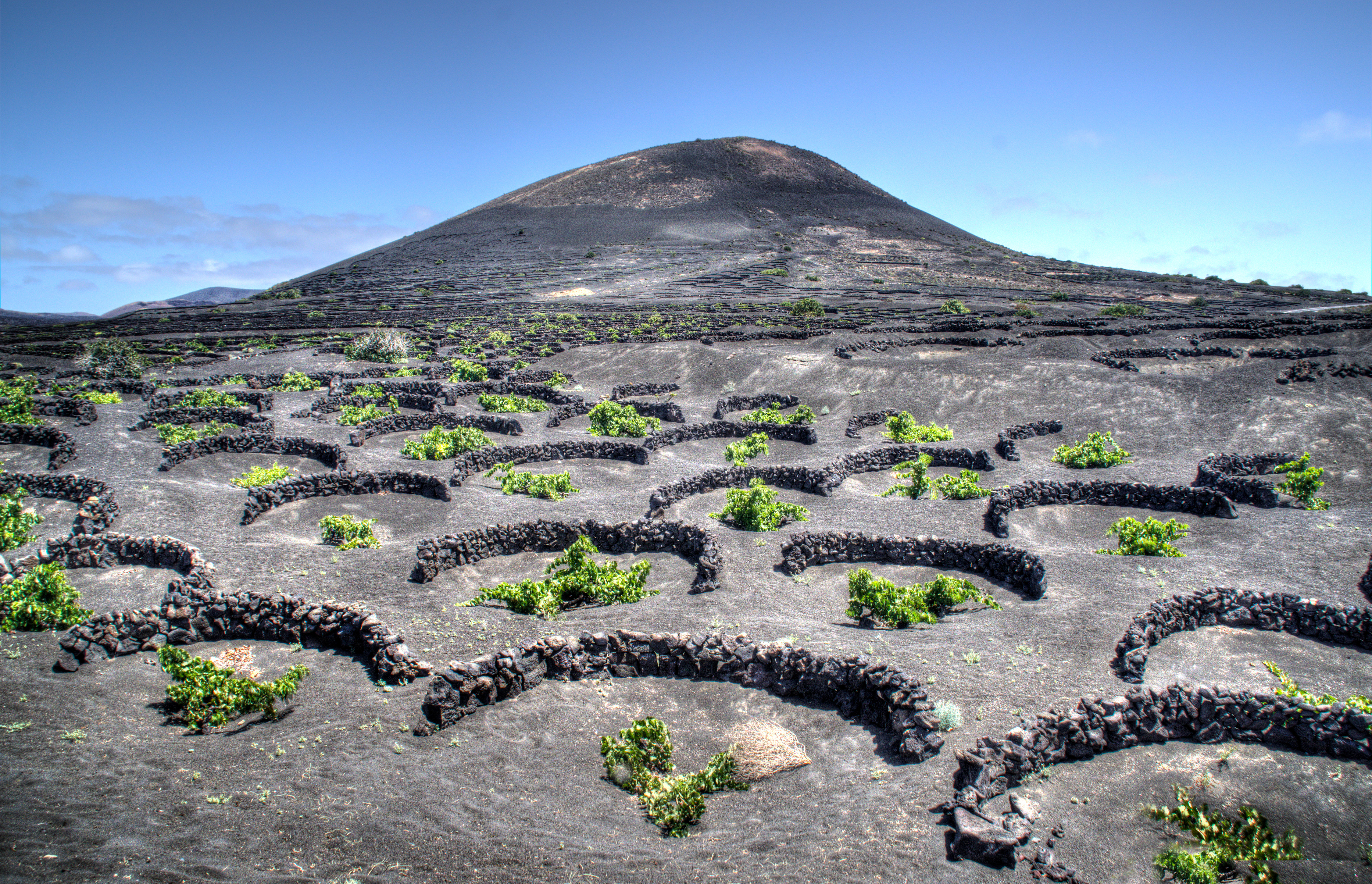
The first thing I learned was the soil. Black, fine, warm under the fingers. It looks like the ash of a fire just put out, and instead it is a blanket: it gathers the moisture of the night and hands it down, drop by drop, to the roots. Here the water does not fall, it makes you wait. And the earth has learned to wait for it.
On that ash I saw the vines, one by one, inside hollows of stone. They seem to be sleeping. It is as if someone, long ago, put them to bed out of the wind and then stayed to watch over them.
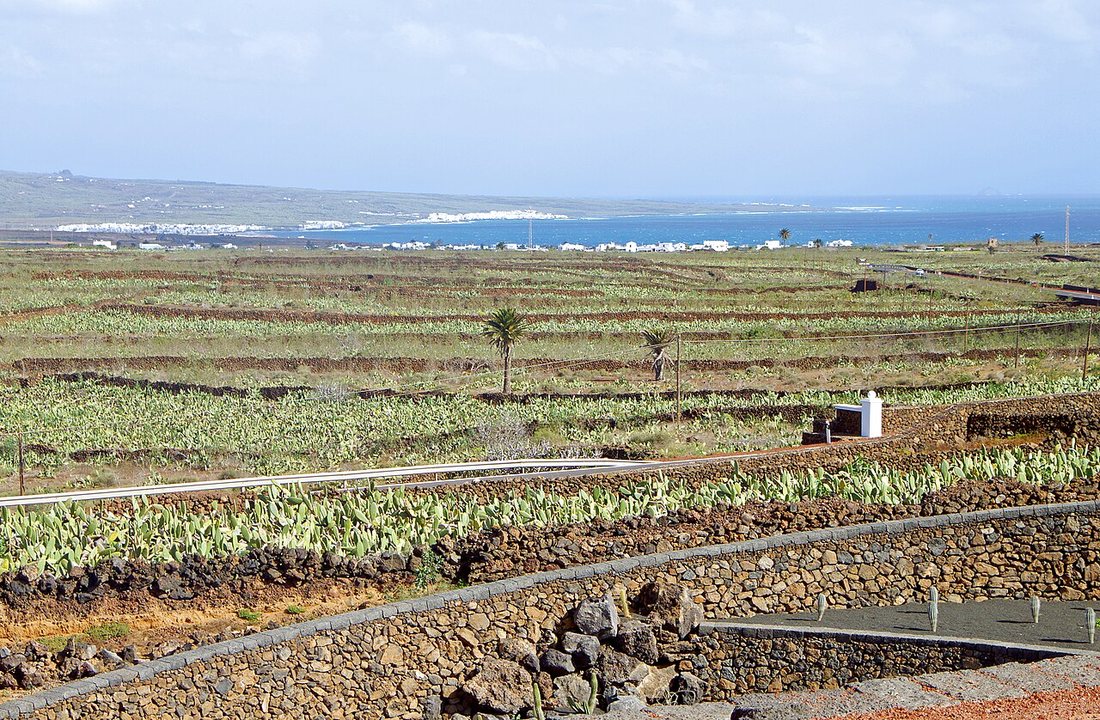
Then the prickly pears: neat, severe rows across the fields of Guatiza, dusted with that white bloom from which red was once made. Plants that do not apologise for having thorns. They live on little, and out of that little they make flowers.
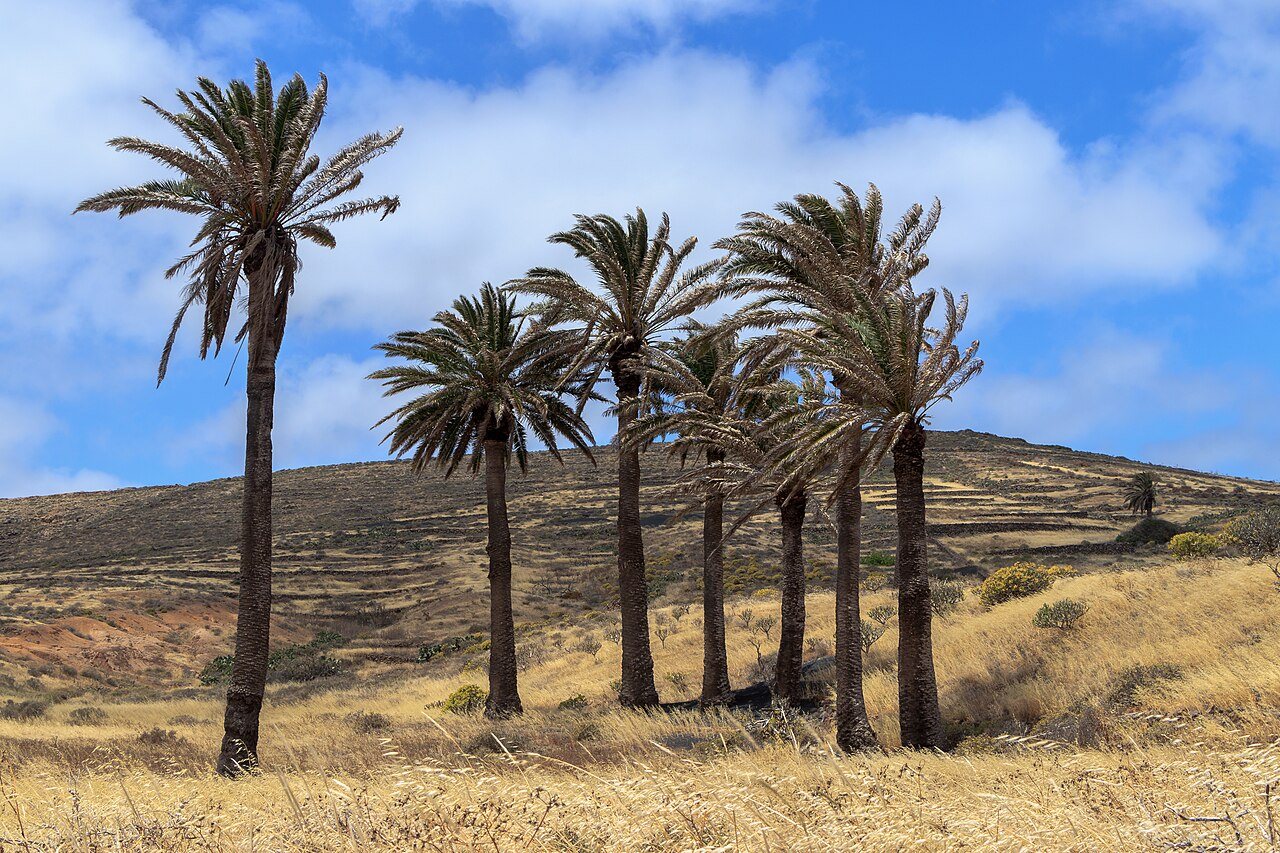
And finally the palms of Haría, thousands of them, all together at the bottom of a valley. The one place on the island where the shade is thick and the air stands still. You walk into it as into a room.
They were few days, and yet they felt long: when everything is new, time widens.
I left with the wind still on me. Those feelings travel with me now: I have put them where I keep the things I love most.
Thank you, Lanzarote.