People · La Geria, Ermita de La Caridad (Yaiza)
La Geria, then and now
A century of photos tells the story of the wine valley: pits dug by hand, camels loaded with grapes, women in the island’s sombrera. The landscape has barely changed.
By Pablo Vidal · 2026-11-16
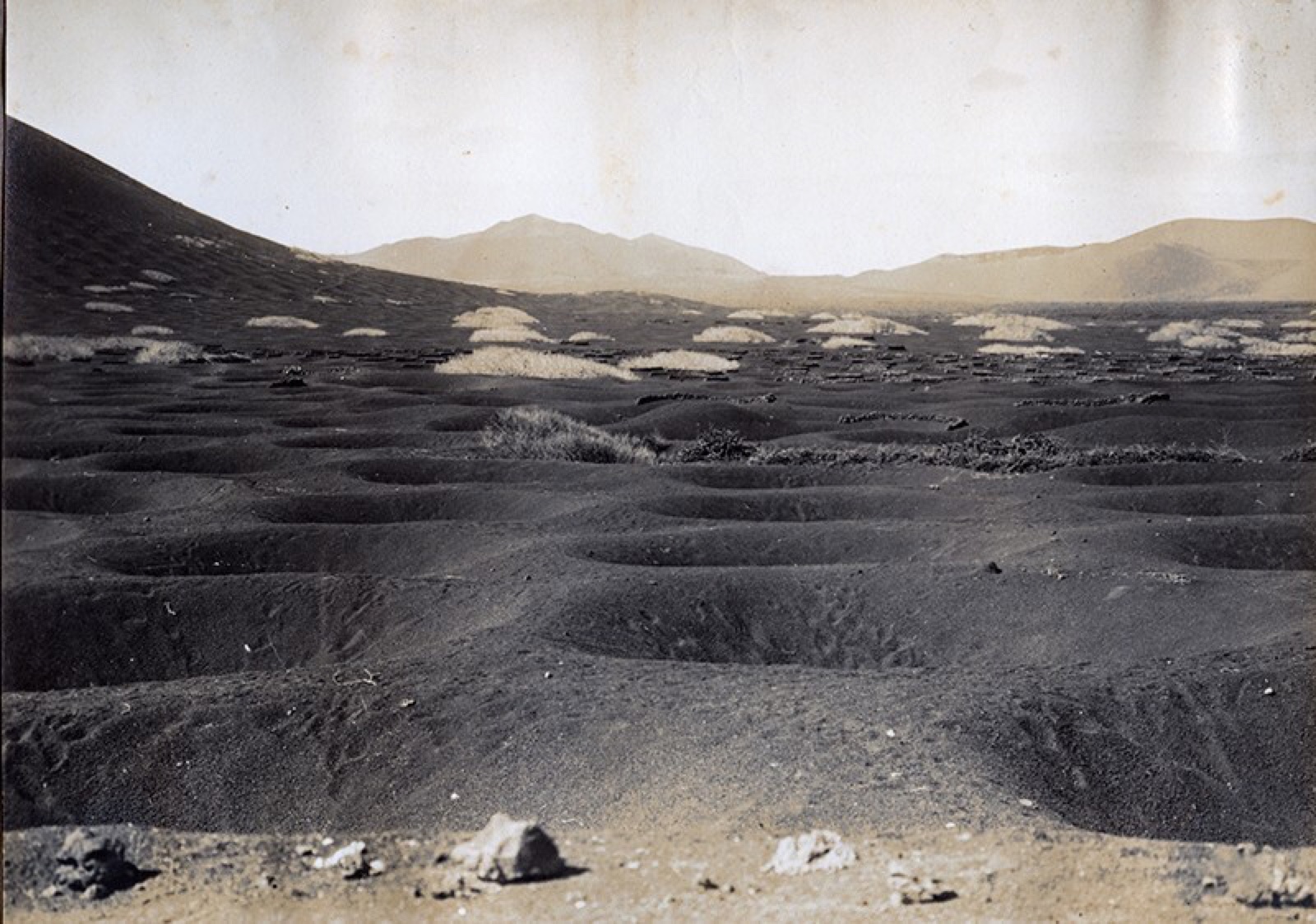
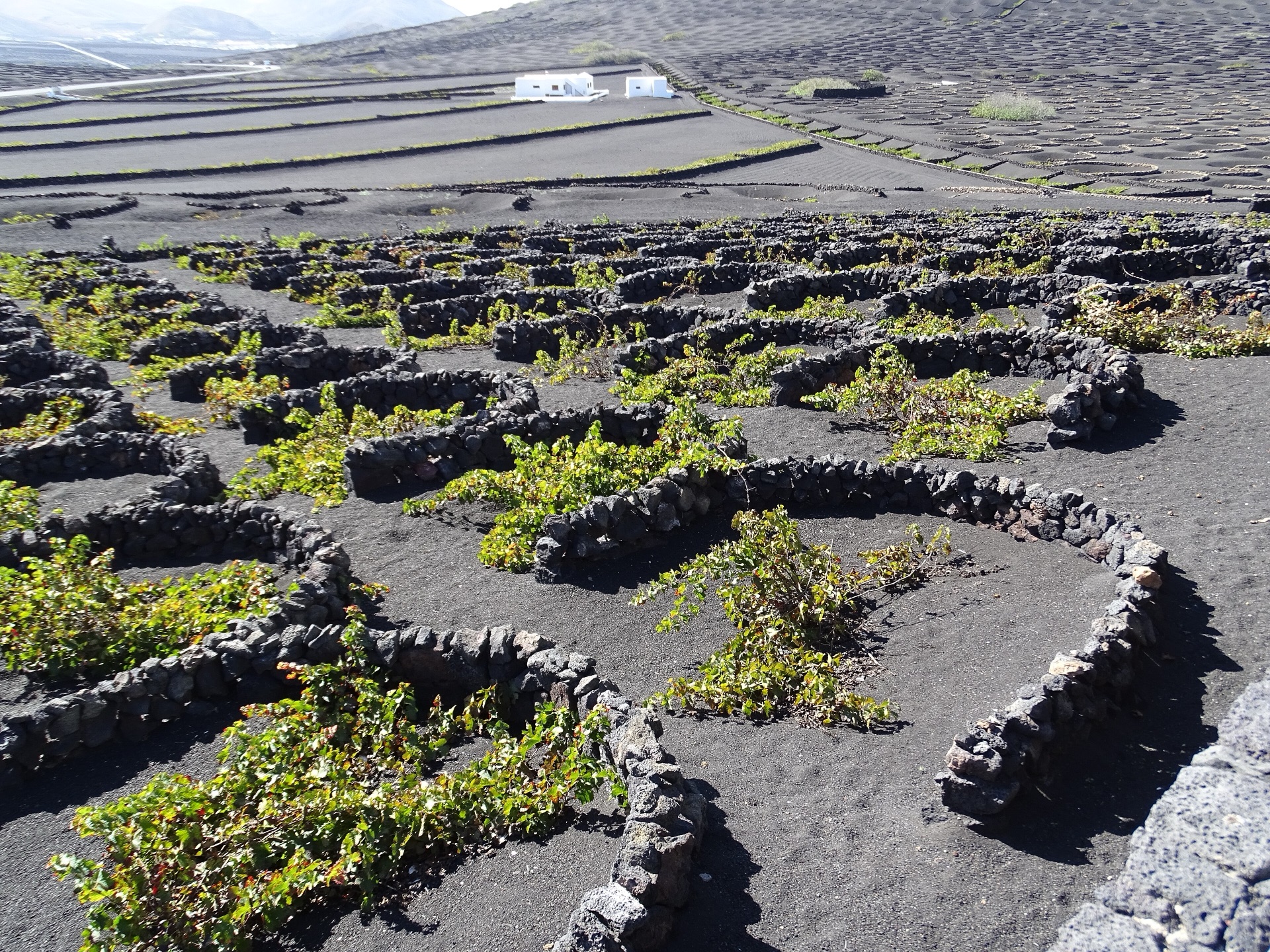
In April 1928 the German photographer Teodoro Maisch passed through La Geria and captured a valley of black pits dug into the ash. That landscape was already two centuries old: between 1730 and 1736 the volcano buried the fields, and farmers learned to dig down to the good soil to plant vines and fig trees.
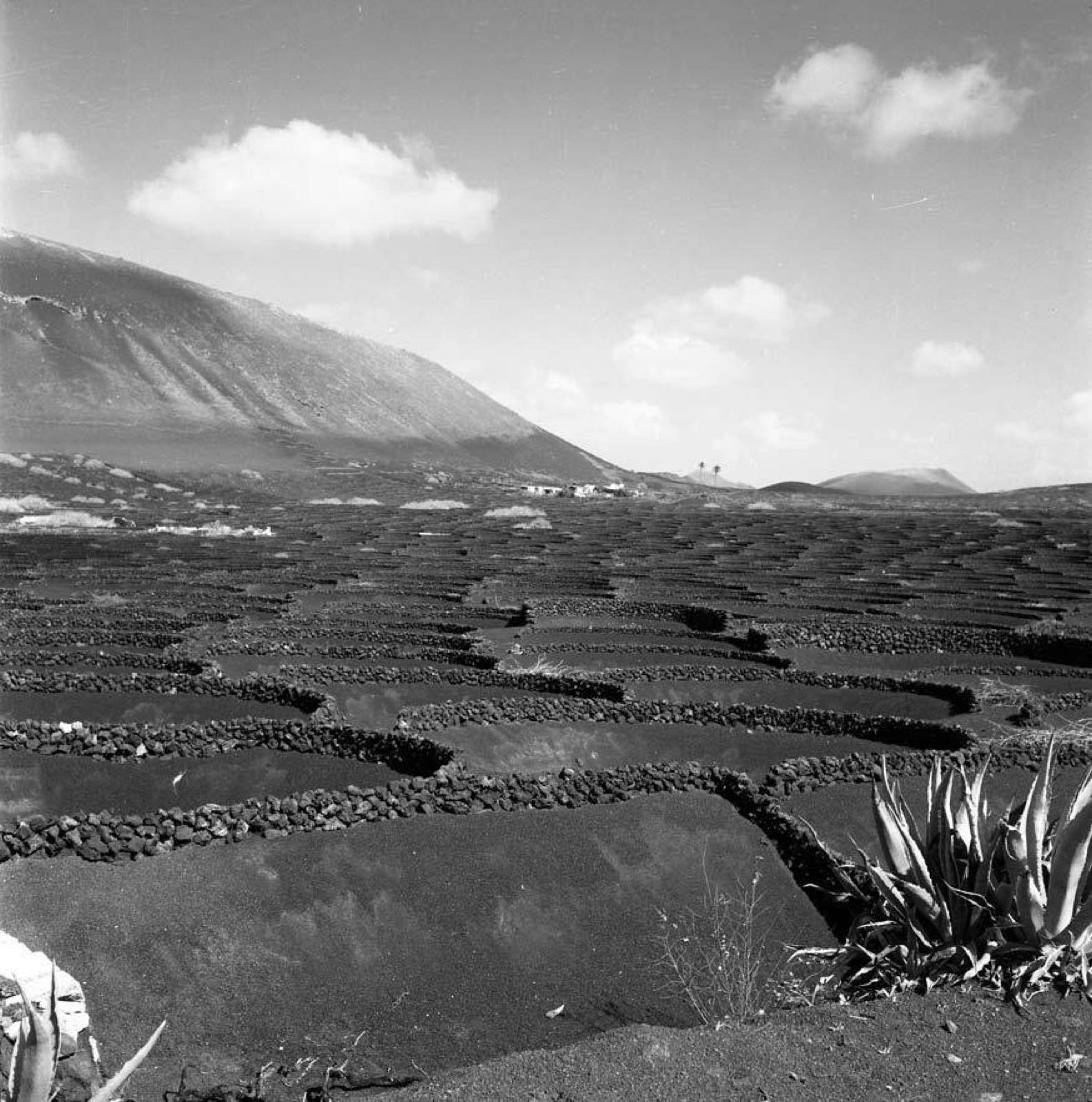
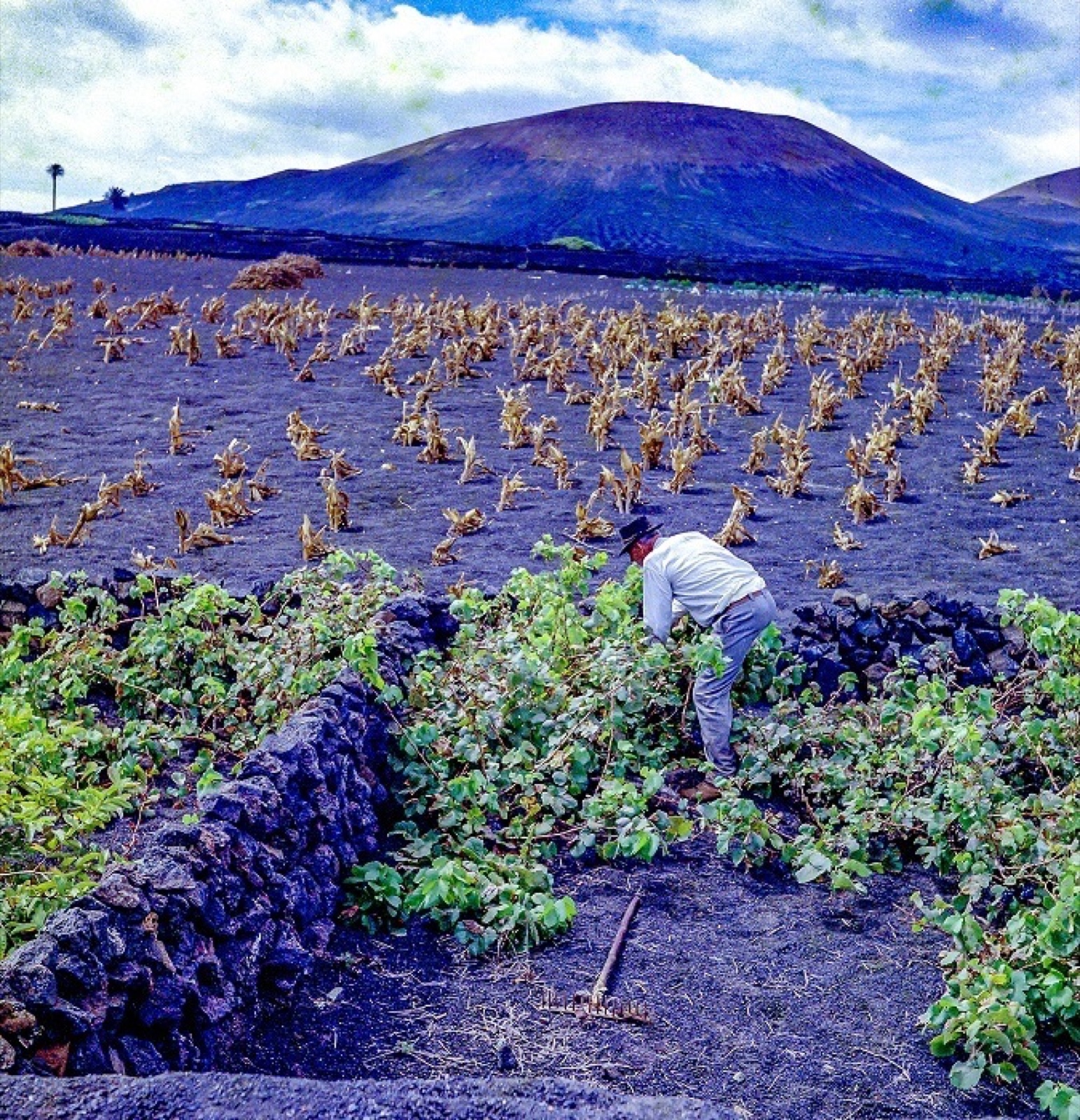
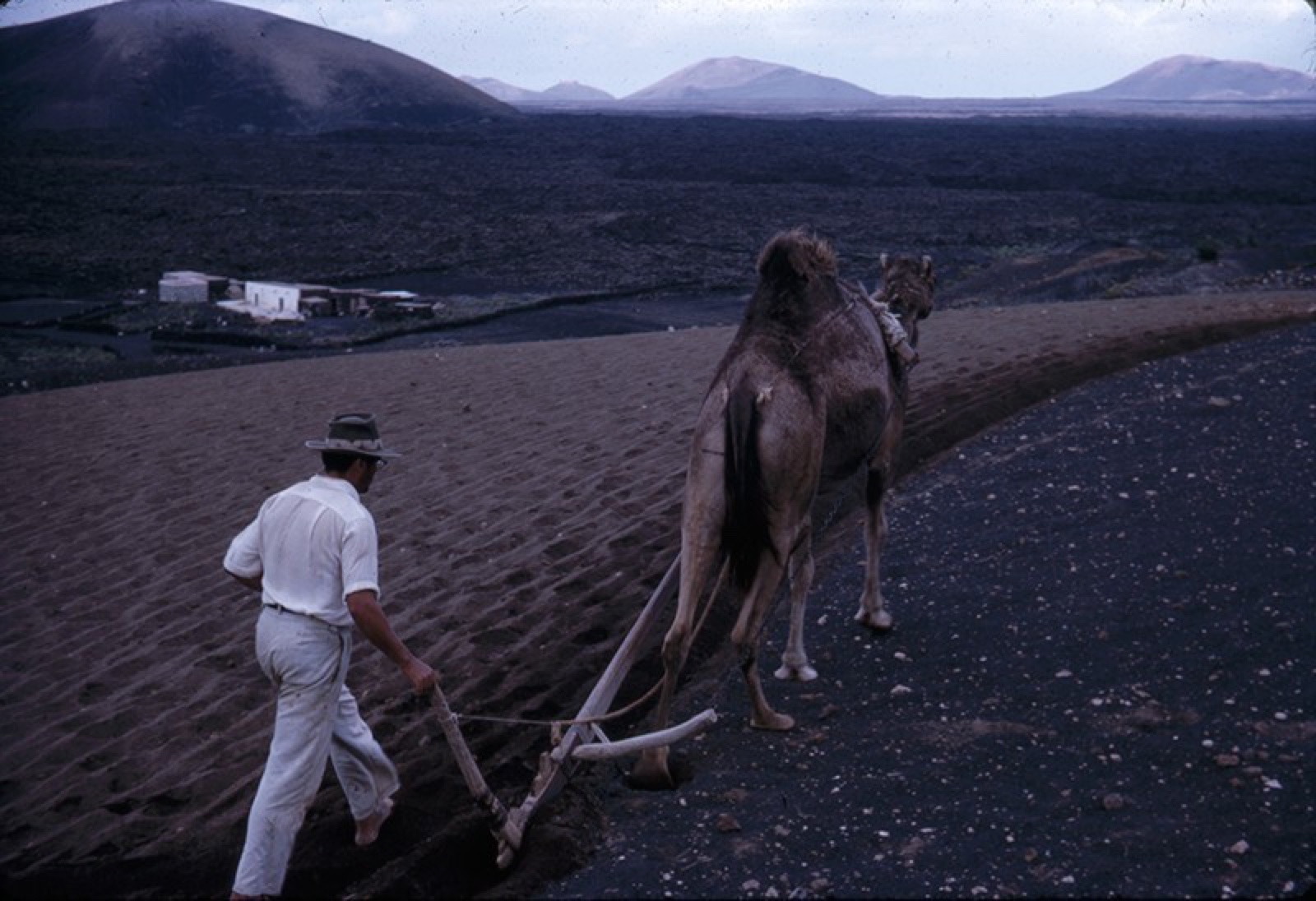
It was all done by hand and by camel. In photos from the 1960s, the farmer ploughs the ash behind his camel, tends the vines one by one and raises stone walls against the wind. No machines: even today, many of the pits are beyond their reach.
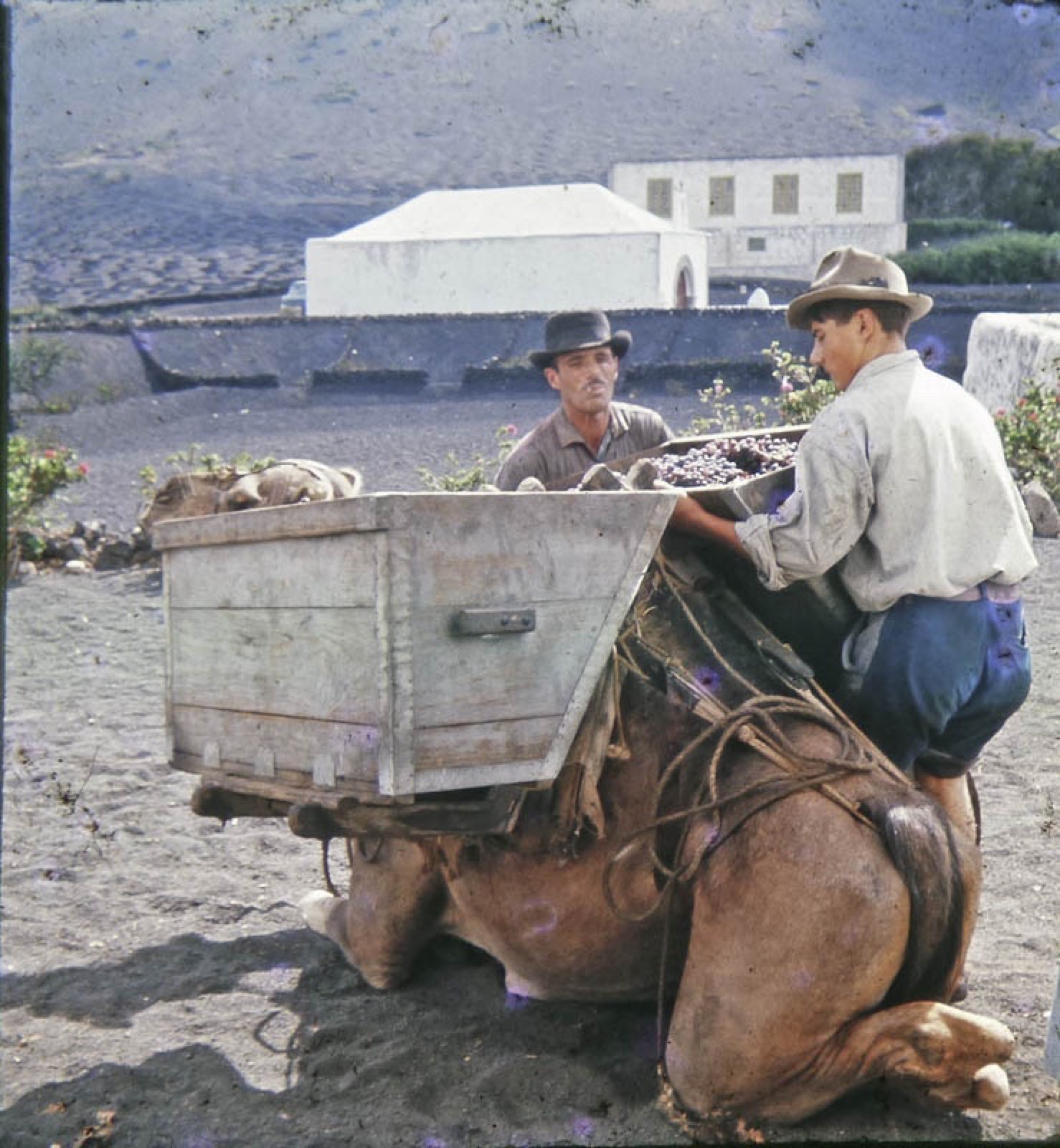
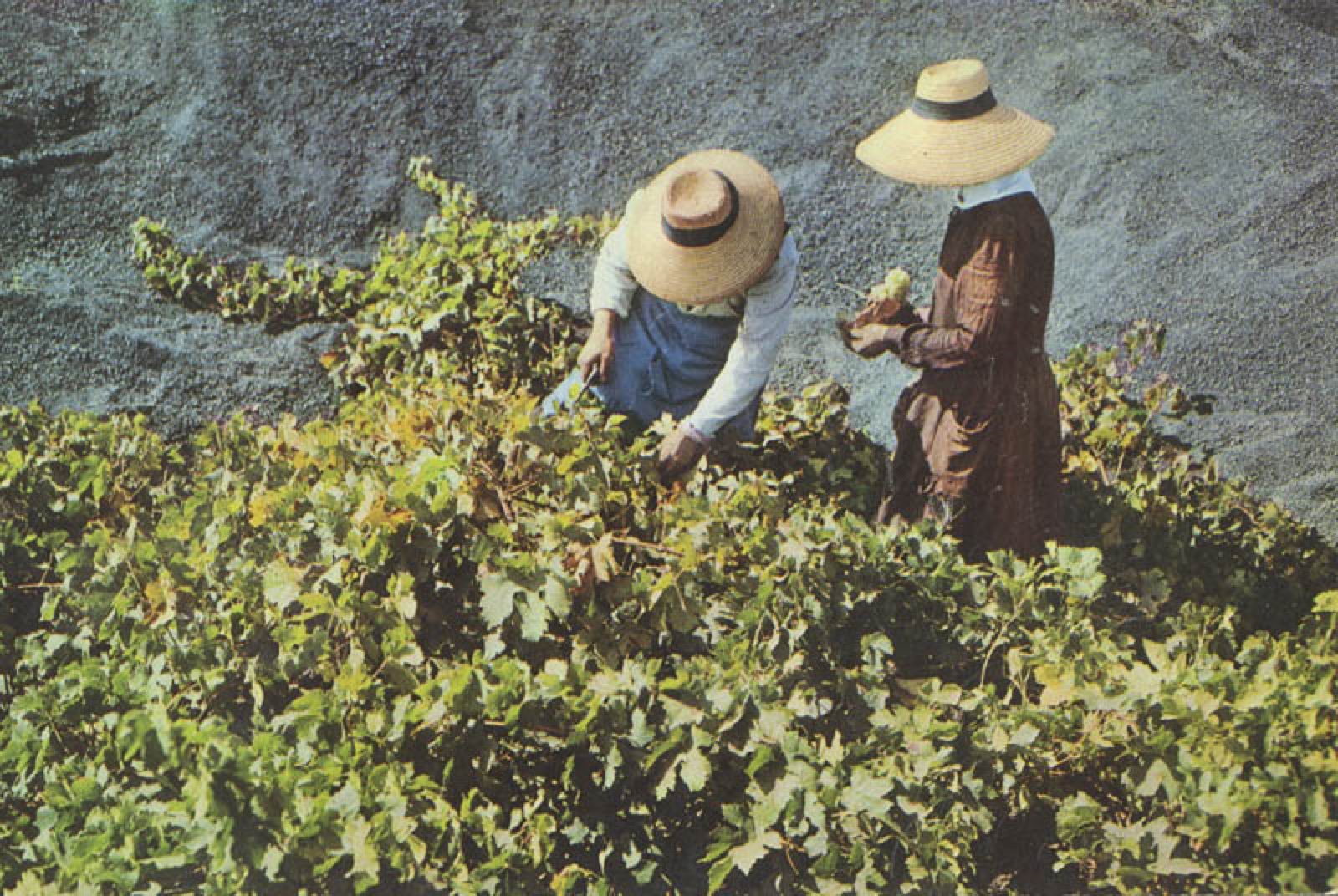
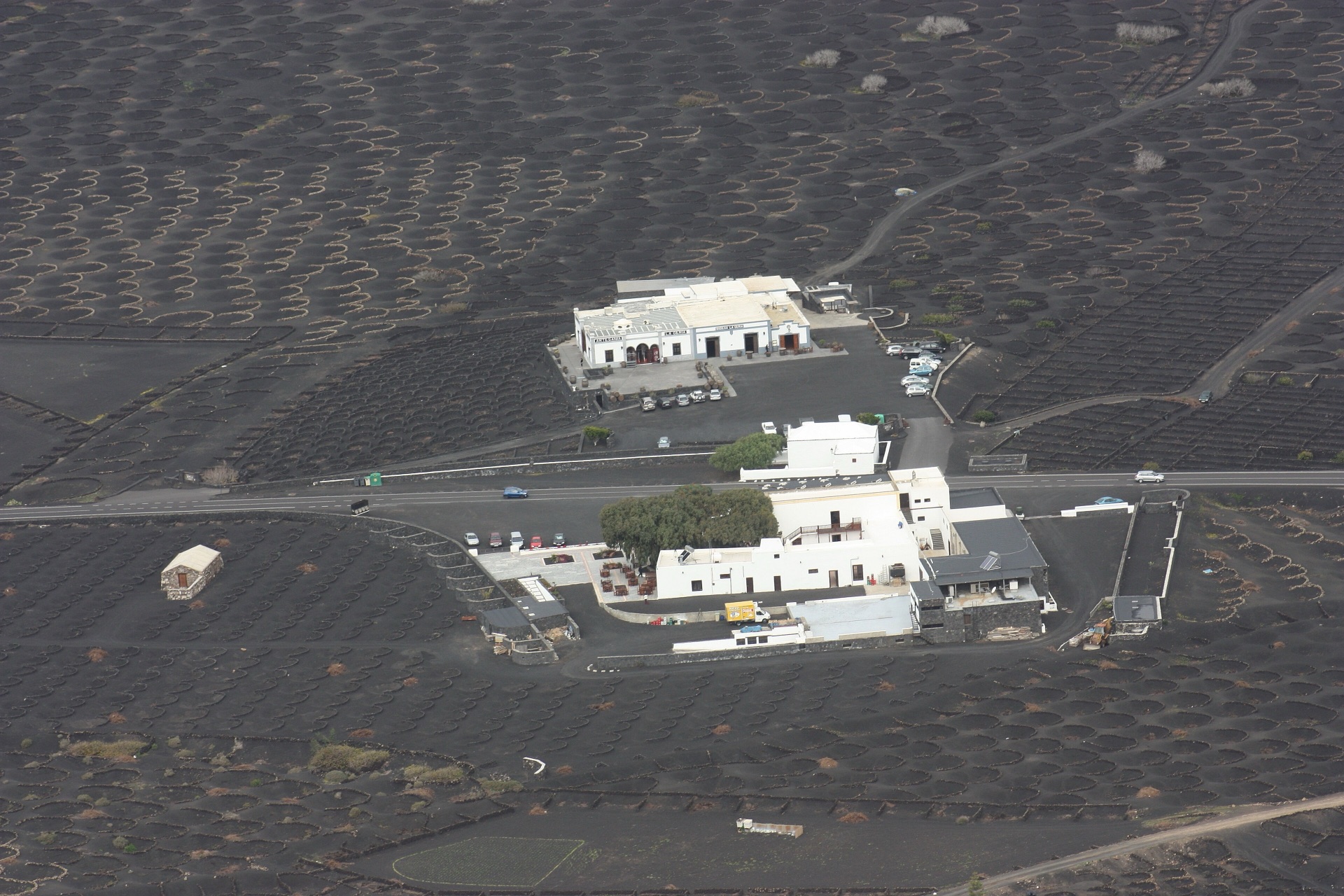
The harvest was a feast of hard work. Women picked the grapes wearing the sombrera, the island’s traditional hat; the bunches went into wooden crates on the camels’ backs, up to three hundred kilos a trip, and down to the wineries beside the chapel of La Caridad, built in 1706, which the ash had buried and the island brought back to light.
Today La Geria is a protected landscape of more than five thousand hectares at the heart of the island. The wineries welcome visitors, but the pits and walls are the same as in the black-and-white photos. And the vines are still pruned by hand, in January.