
People · Arrecife, Lanzarote
Fermina, the woman who gave an islet her name
A shipyard, a shipwreck, a Manrique dream and, a century later, Arrecife’s finest sunset. The story of a piece of rock in the bay.
By Luz Lobos · 2026-11-11
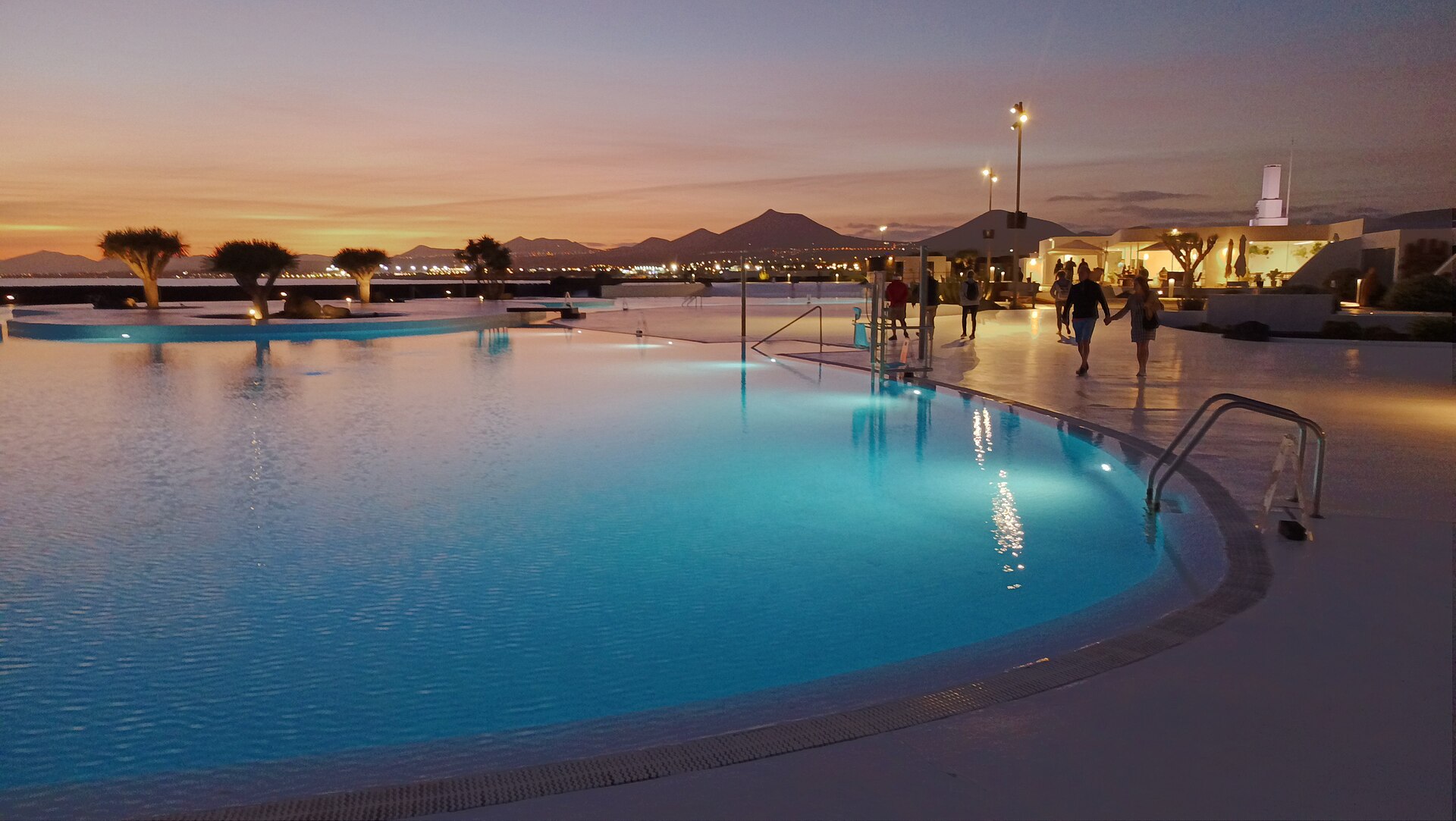
Look across Arrecife’s bay at the end of the day and you will see a white islet with its lights already on. Today it is called Fermina. But the name was not always there, and behind it stands a woman.
It used to be the Quebrado, the broken rock: a crack split the reef in two. Sailors had always known it and gave it a wide, respectful berth; it already appears on the island’s old maps and in the pages of nineteenth-century historians.
In 1918 Fermina Santana arrived. She was a shipowner, a woman at the head of ships at a time when hardly anyone imagined it, and she won permission to build a shipyard on the rock. New boats were born there and old ones came to rest. The islet stopped being the Quebrado: from then on, for all of Arrecife, it was Fermina’s.
The boat that bore her name was launched in 1921: a sloop some twenty-five metres long, built by hand by master shipwrights. For years it crossed the sea between the islands laden with goods, until a night in June 1954, when, bound for Arrecife with sugar cane, it went down. Almost all the crew were saved, with the help of a coastguard vessel; one sailor was missing. The Fermina never came back to port, but the name could no longer be erased.
Years later, as tourism arrived, César Manrique dreamed of turning that rock into an oasis: a pool, a garden, a corner from which to watch the town from the water. It was 1968. People began to call it the Islote del Amor, because it was where couples met, or because Manrique himself fell in love with it. The dream took so long that he never saw it done.
Then came long years of waiting, the islet closed, its white walls covered in graffiti, the town gazing at it from the seafront. Until it opened. Today you cross by a footbridge, entry is free, and inside there is a centre about the bay, a restaurant, a terrace and a large saltwater pool.
A woman, a shipyard, an artist and a century of patience. Cross the bridge as Arrecife’s lights begin to come on and you will understand why, a hundred years later, we still say Fermina.