
Art · Lanzarote
César Manrique, the man who drew an island
Painter, sculptor and defender of the landscape, he taught Lanzarote to see itself differently.
By Luz Lobos · 2026-10-17
He was born in Arrecife in 1919. He trained at the San Fernando Academy of Fine Arts and spent almost twenty years in Madrid, painting and exhibiting in Spain and abroad, the Venice Biennale included.
In 1964 he moved to New York, showed his work at the Catherine Viviano gallery and saw kinetic art up close. Yet he missed the landscape and the people of his island, and in 1966 he came home to Lanzarote for good.
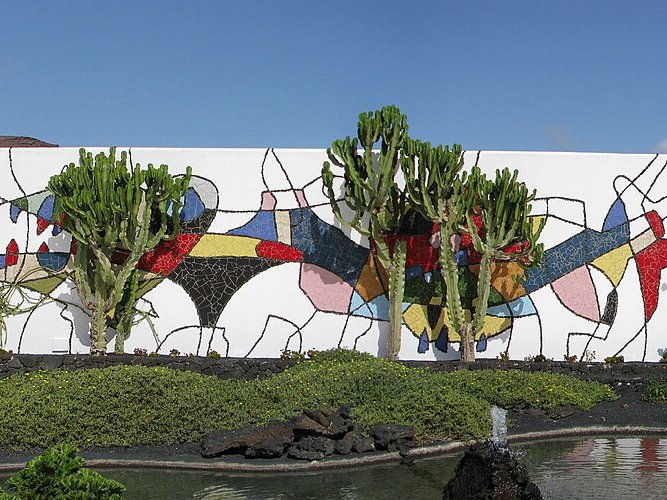
What followed changed the island. The Monumento al Campesino, El Diablo restaurant in Timanfaya, the Mirador del Río, the Jameos del Agua, the Castillo de San José reborn as a museum of contemporary art and, in 1991, the Jardín de Cactus in Guatiza. He called it art-nature: step in without taking over, and let the lava and the light do their share.
He also knew when to say no. He opposed high-rise hotels and argued for tourism on a human scale. Several of those projects were scaled back or never built, and Lanzarote kept its low skyline.
He died in 1992. Among his last works are the wind toys, sculptures that turn above the island’s roundabouts. A year later UNESCO named Lanzarote a Biosphere Reserve, and his way of seeing the place weighed in that decision. Look around today and he is everywhere.