
Music · Casa-Museo del Timple · Palacio Spínola, Teguise
Five strings that sound like the Canaries
In an eighteenth-century palace in Teguise, a small museum tells the story of the islands’ smallest, most beloved instrument.
By Irya Picasso · 2026-09-29
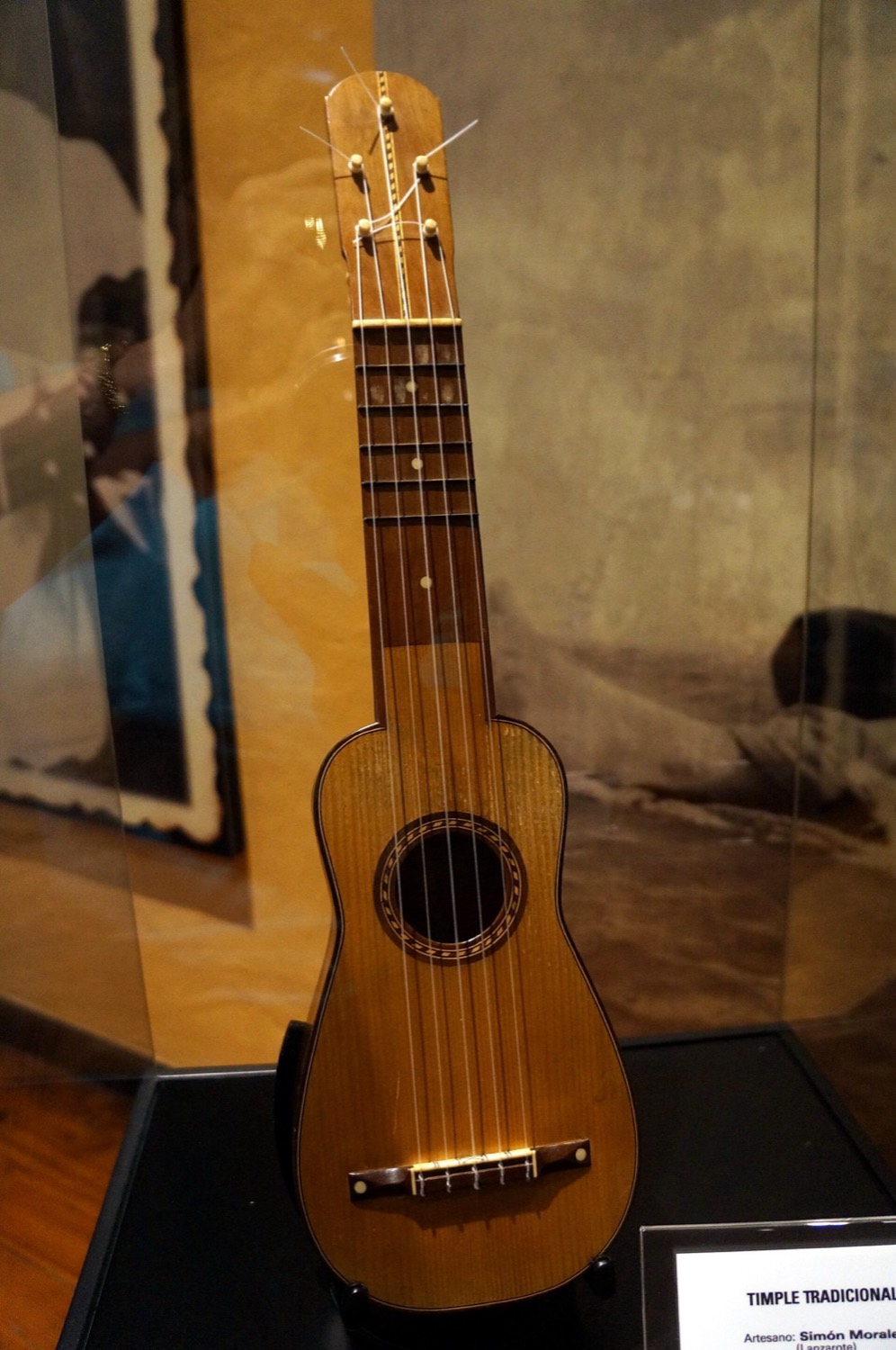
It fits in the crook of an arm, yet it carries a whole archipelago inside. The timple — a small five-string guitar with a bright, slightly mischievous voice — is the sound of traditional Canarian music, heard at village fiestas, in folías and in the kitchens where someone always ends up playing.
In Teguise it has a house of its own. The Casa-Museo del Timple fills the Palacio Spínola on the Plaza de la Constitución, one of the town’s great stately homes, built between 1730 and 1780. In the 1970s it was restored by the architect Fernando Higueras, with César Manrique involved, and for a time it served as the official Lanzarote residence of the President of the Canary Islands.
Walking through it feels more like visiting a home than a museum: courtyards of white light, dark timber, rooms that breathe. And within them, the instrument’s story, told at an easy pace.
From baroque guitar to 3D printer
The rooms follow the timple backwards and sideways. Backwards to its baroque ancestors; sideways to distant cousins around the world, from the Russian balalaika to the West African kora. A luthier’s workshop shows how wood becomes body, neck and voice, and at the end come today’s timples, in carbon fibre or even 3D-printed. Tradition, here, is not kept behind glass.
The palace makes music too. For years it has hosted the series “Timples y otras guitarras del mundo”, which marked its tenth anniversary last October with a concert by Germán López, Beselch Rodríguez, Leandro Ojeda, Yone Rodríguez and Altahay Páez — five different ways of making the same five strings sing.
The museum opens daily from 10am to 3pm. Admission is €3; Lanzarote residents pay €1.80 and people from Teguise get in free. An hour is enough, though it is easy to linger.